
Skate tricks get easier when the board setup matches the way you ride. A beginner can practice for hours and still struggle if the deck is too wide to flip comfortably, the wheels are wrong for the surface, or the trucks feel unstable on landing. This guide connects setup choices to practical flatground progression so new skaters can tune the board before trying to force the trick.
The focus is street and flatground skating: ollies, kickflips, basic board control, protective gear, and pre-session hardware checks. For site context, see about Kickflip Boards or contact our team. This article is not a medical or professional coaching substitute; skate within your ability, avoid traffic, and get qualified instruction when a spot or trick feels beyond your current control.
Anatomy of a Trick-Ready Skateboard
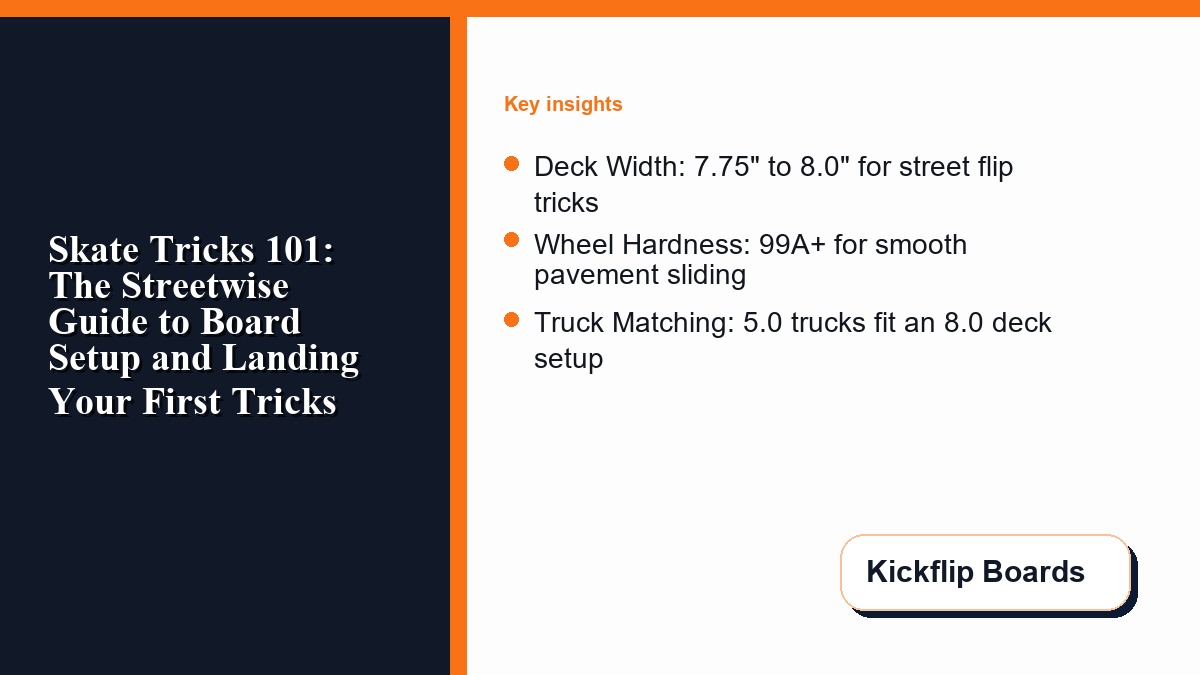
Popping, flipping, and catching a skateboard depends on small hardware details. Deck width changes how fast the board rotates. Wheel hardness changes grip and vibration. Truck width and tightness affect balance during pop, flick, and landing.
Deck Width and Shape
Deck width is the first setup choice to check. A 7.75-inch to 8.0-inch deck is common for technical street tricks because it is lighter and rotates more quickly. Wider decks, such as 8.25 inches and up, give more landing surface and can feel better for transition, ramps, and cruising. The Warehouse Skateboards complete skateboard guide explains how deck parts work together when building a complete setup.
Wheel Hardness and Surface
Wheel durometer matters as much as deck width. Harder wheels, often 99A and above, are common on smooth concrete because they slide more easily and roll quickly in parks. Softer wheels, such as 85A to 93A, absorb more chatter on rough asphalt and can feel better on crusty street spots. If you are assembling a complete, use a builder such as the Skate Warehouse skateboard builder to check compatibility before ordering parts.
Truck Width and Tightness
Truck width should line up with deck width so the wheels sit in a predictable position under the board. Trucks that are too wide can feel sluggish; trucks that are too narrow can feel unstable. Beginners learning ollies and kickflips often start with medium-to-tight trucks for a steadier landing platform, then loosen them as carving and balance improve.
Protective Gear for Trick Progression
Learning skate tricks includes falls. Protective gear cannot remove risk, but it can reduce scrape exposure and help skaters build confidence while practicing on appropriate surfaces. Choose gear that fits securely and is designed for the riding style.
Helmet Labels and Fit
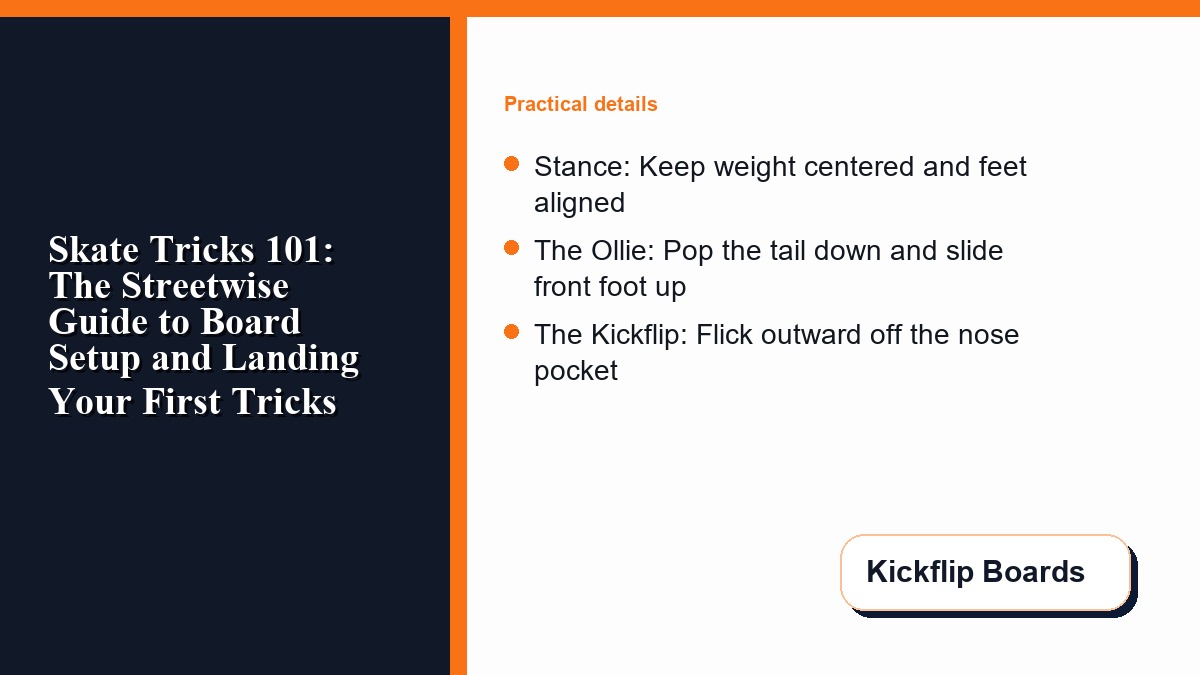
Use a skate-appropriate helmet and read the label inside the shell. The CPSC recreational helmet guidance distinguishes helmet categories and standards, while ASTM F1492 covers helmets for skateboarding and trick roller skating. The CDC HEADS UP skateboard helmet fact sheet gives basic helmet fit reminders. A certified helmet is tested for defined conditions; it does not make skating injury-free.
Wrist Guards, Pads, and Fall Habits
Many new skaters instinctively reach forward when falling. Wrist guards may help limit scrape exposure and reduce extreme wrist bending, but they do not guarantee protection from fractures or other injuries. Knee pads and elbow pads can make repeated practice less punishing. The Sector 9 protective gear guide and TSG skate gear catalog are useful references for understanding common pad types.
Street vs. Park Setup Comparison
There is no single perfect skateboard setup. The best choice depends on the surface, trick goal, and rider preference. Use this comparison as a starting point, then adjust after real sessions.
| Component | Street and Flatground Setup | Park and Transition Setup |
|---|---|---|
| Deck width | 7.75 to 8.0 inches for quicker flip response | 8.25 inches and up for more landing platform |
| Wheel hardness | 99A on smooth ground; 85A to 93A on rough streets | 99A to 104A for speed and slide on smooth concrete |
| Truck feel | Medium-to-tight for stable pop and catch practice | Medium-to-loose for carving and transition flow |
| Grip tape | Fresh, grippy tape for flick control | Standard grip that balances control and shoe wear |
How to Progress From Basics to Flatground Tricks
Trick progression starts before the pop. Get comfortable pushing, turning, stopping, and rolling over small cracks before practicing ollies. If the riding foundation feels shaky, the trick attempt will usually collapse before the board leaves the ground.
Stance and Push
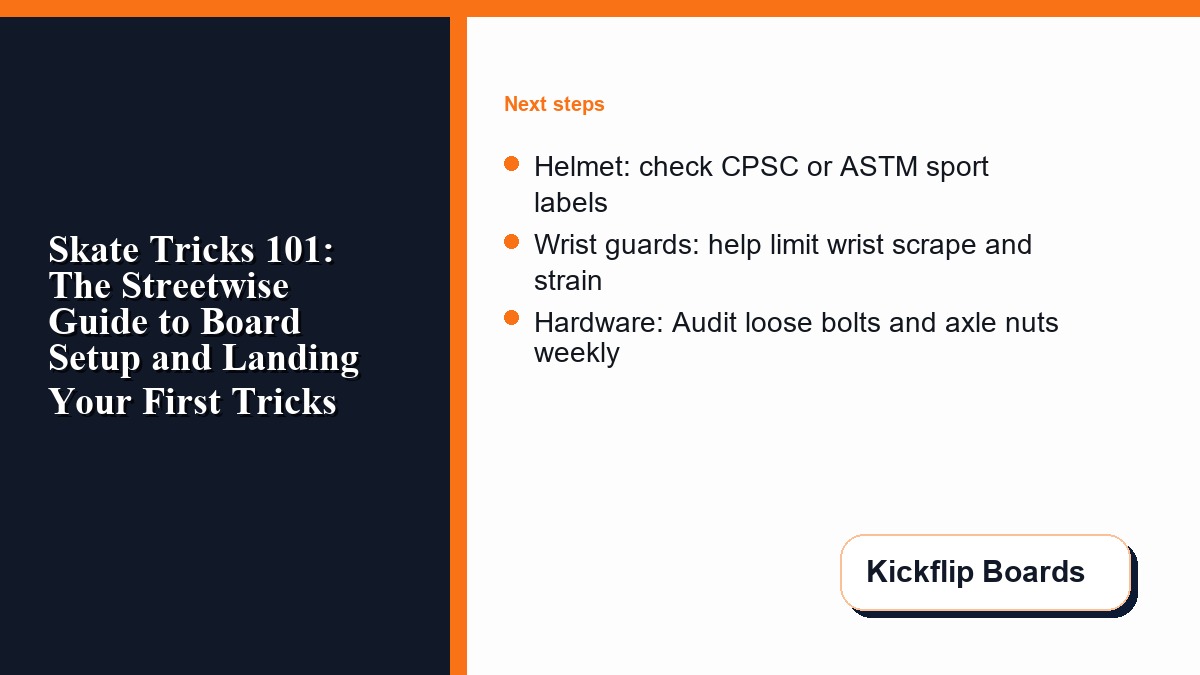
Figure out whether regular or goofy feels natural. Keep weight centered over the board, push with the back foot, and return both feet to riding position smoothly. Practice rolling, stopping, and small manuals before repeating pop tricks.
The Ollie
Place the back foot on the tail and the front foot near the middle of the deck. Compress, jump, and snap the tail down while sliding the front foot up the grip tape. Lift the knees so the board can rise, then level it by guiding the nose forward. Practice on flat, dry ground away from traffic.
The Kickflip
A kickflip starts like an ollie, but the front foot slides toward the nose pocket and flicks outward off the edge. Keep shoulders parallel to the board and watch for the grip tape to return. Catch with bent knees and step off safely when the board gets away from you.
Maintenance Checks Before a Skate Session
Skateboards change as they wear. Loose hardware, dirty bearings, razor tail, and smooth grip tape all make tricks less predictable. A short inspection before each session can prevent small setup issues from turning into repeated failed attempts.
Keep a simple notes habit for the first few weeks. Write down the surface, wheel feel, truck tightness, and which tricks felt stable. If kickflips are rotating but landing upside down, adjust foot position before changing hardware. If every landing wobbles, tighten trucks slightly or practice stationary catches. Small changes are easier to understand when you change only one variable at a time.
- Inspect the helmet shell and straps before riding.
- Check axle nuts, mounting bolts, kingpins, and bushings.
- Spin wheels by hand and listen for gritty bearings.
- Scan the spot for gravel, wet patches, traffic, and deep cracks.
- Replace grip tape or the deck when pop and traction feel inconsistent.
Skate Tricks and Setup FAQ
What deck width is good for learning skate tricks?
Many street skaters start around 7.75 to 8.0 inches because narrower decks rotate quickly. Wider decks can feel better for stability, transition, and larger riders.
Should street skaters use hard or soft wheels?
Use harder wheels on smooth park concrete and softer wheels on rough asphalt. The more uneven the ground, the more valuable vibration control becomes.
How tight should skateboard trucks be?
Medium-to-tight trucks can help early trick practice feel steadier. Looser trucks turn more sharply but demand better balance during landings.
How do I check a skateboard helmet?
Read the interior label, inspect the shell, and make sure it fits low and level on the head. Look for standards relevant to the riding style, such as ASTM F1492 for skateboarding and trick roller skating.
Can protective gear prevent all injuries?
No. Helmets, wrist guards, and pads can reduce certain risks and scrape exposure, but skating still involves falls. Practice within your skill level and use safe spots.
0 Comments